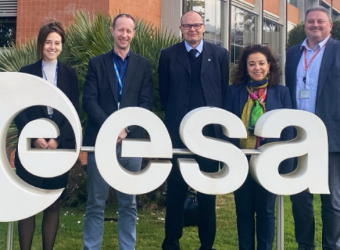










On Thursday, 10 May 2025, ESA’s Centre for Earth Observation (ESRIN) in Frascati welcomed a senior delegation from the World Bank (WB) to review the progress and future direction of the strategic partnership between the two institutions. The visit underscored the shared ambition to scale the use of satellite-based Earth Observation (EO) in support of climate resilience, disaster risk management, and digital development across the Global South.

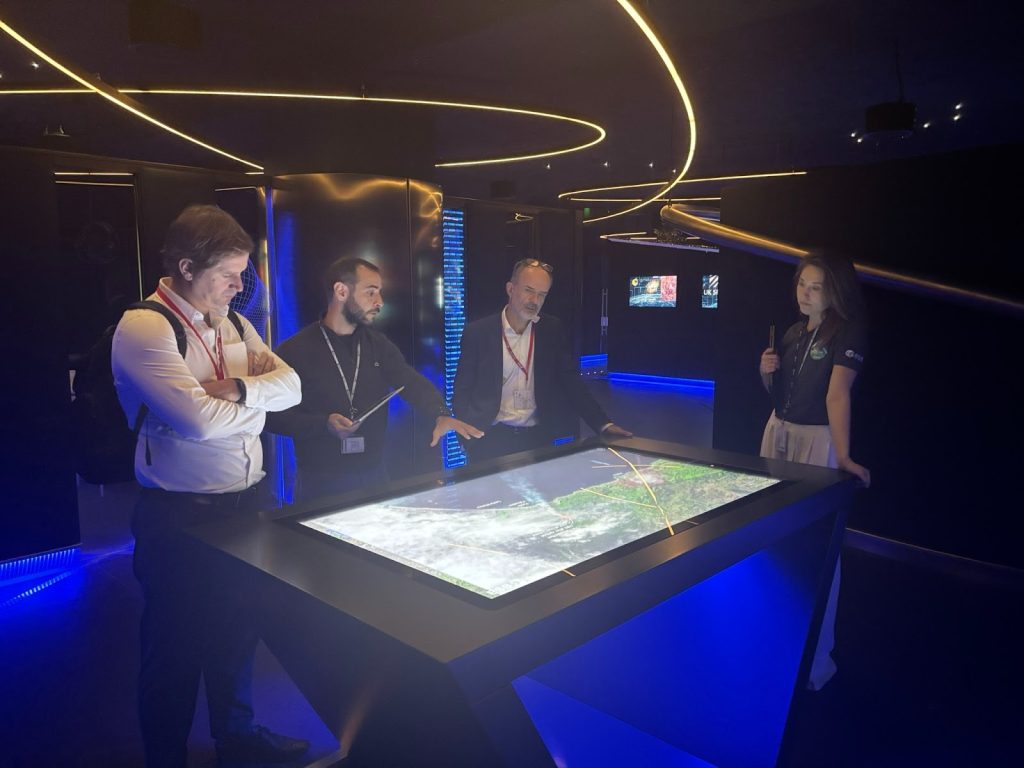
The World Bank delegation was led by Niels Holm-Nielsen, Practice Manager of the Global Unit for Disaster and Climate Risk Management and Head of the Global Facility for Disaster Reduction and Recovery (GFDRR), alongside Edward Charles Anderson, Senior Technology and Resilience Specialist and Program Lead of the Bank’s Digital Earth Partnership (DEP). They were welcomed by ESA GDA representatives including Christoph Aubrecht (ESA GDA Programme Coordinator), Susanne Mecklenburg (Head of the Climate and Long-Term Action Division), Giuseppe Ottavianelli (Head of the Applications Section), Yves Barthelemy (ESA Representative to ADB), Zoltan Bartalis (EO Exploitation Engineer), and Anika Ruess (EO Specialist). The agenda included strategic discussions on advancing together in the next phase of the partnership, an interactive phi-experience tour guided by Emmanouil Lagoudakis (ESA)
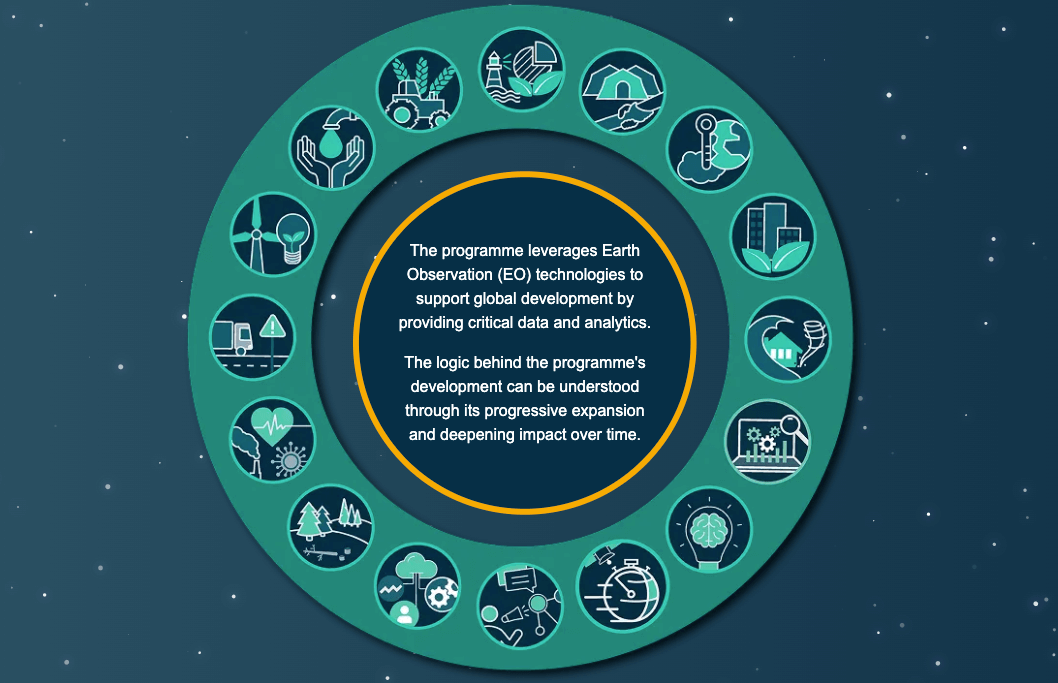
The ESA–World Bank partnership, rooted in the joint Space for International Development Assistance (Space for IDA) framework and supported by ESA’s Global Development Assistance (GDA) programme, aims to mainstream Earth Observation (EO) across development operations. Since 2008, it has supported 78 World Bank projects in over 67 countries, backed by €40 million in ESA member state funding. ESA mobilises EO industry consortia to deliver tailored services, while the World Bank integrates these into operational planning and capacity building. A key pillar of this collaboration is the Digital Earth Partnership (DEP), hosted within the World Bank’s disaster and climate risk unit. DEP complements ESA’s GDA by improving access to EO tools, shaping a “space for development” strategy, and promoting public goods and capacity building, supported through mechanisms like the ESA GDA Knowledge Hub and a forthcoming Multi-Donor Trust Fund.


Key outcomes and discussion points from the visit included:
- Commitment to future collaboration: Both institutions reaffirmed their intention to deepen cooperation under the evolving ESA GDA framework, which will transition into and evolve under ESA’s new Earth Action programme in 2026. This evolution aims to build on past successes and expand reach and scope.
- Strategic direction: A central theme of the discussion was the distinction between building internal EO capacity within the World Bank and transferring those capacities to its client countries. While training and EO service integration for Bank staff remains essential, there is a renewed focus on empowering digital economies in partner countries by engaging more directly with local institutions and end users. ESA’s ambition to support this shift is reflected in its push for triangular cooperation models, combining space expertise from ESA, operational capacity from the Bank, and on-the-ground impact from local actors.
- Technical ambitions: These include expanding the use of Sentinel-based products in resilience and development projects, enabling more systematic reuse of commercially acquired satellite data funded by World Bank operations, and promoting satellite-derived public goods to ensure broad, equitable access to high-quality EO data in support of sustainable development goals.
The visit marks another milestone in the long-standing ESA–World Bank collaboration and highlights the growing role of space technology in shaping effective, data-driven development strategies. As the world faces increasing climate and disaster risks, this partnership stands as a model of how EO can enable transformative, resilient development.