










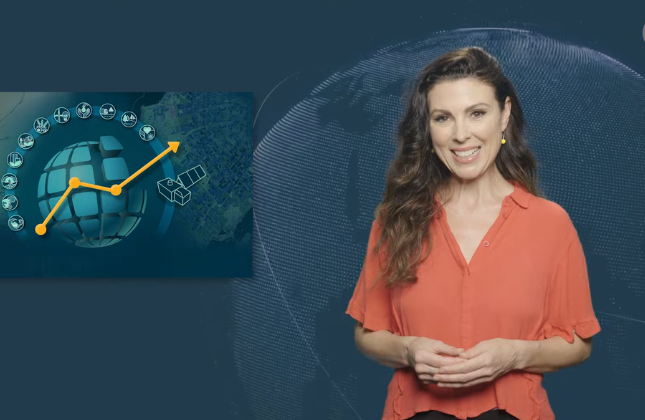
The European Space Agency (ESA) and the United Nations Office for South-South Cooperation (UNOSSC) are working together to help countries use satellite data to support sustainable development.
Satellite Earth Observation (EO) data can help governments make better decisions. It can monitor floods, track changes in forests and farmland, map cities, protect coastlines and improve disaster preparedness. These tools are becoming increasingly important as countries respond to climate change, rapid urbanization and growing development needs.
The challenge has not been the technology itself. It has been connecting these advanced tools with the decision makers in countries that need them most. Through their partnership, ESA and UNOSSC are helping bridge that gap by linking satellite expertise with national development priorities.
We Partner
ESA and UNOSSC combine their strengths to help countries use satellite data for planning, resilience and sustainable development.
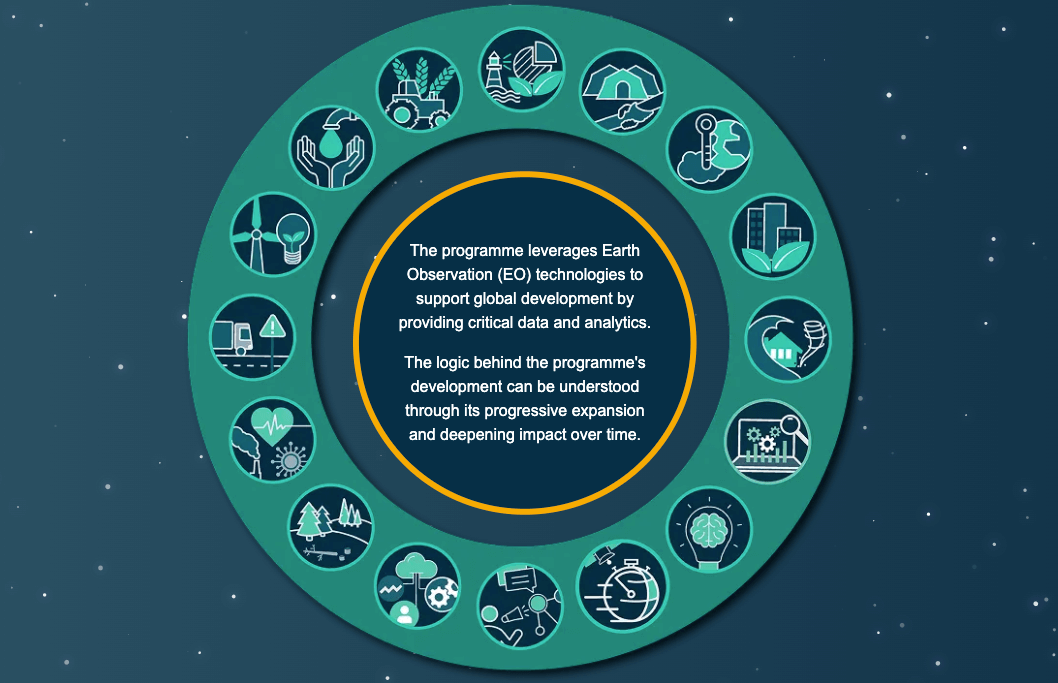
ESA contributes technical expertise, satellite data services and nearly 20 years of experience supporting development through its Global Development Assistance programme, which has delivered more than 130 projects in over 80 countries. In 2026, this work became part of ESA’s new Earth Action programme.
UNOSSC brings its mandate to promote South-South and triangular cooperation. It works with governments, United Nations entities and development partners to connect countries with knowledge, expertise and practical solutions. Through platforms such as South-South Galaxy+, UNOSSC helps countries share experiences and build new partnerships.
The partnership combines ESA’s technical capabilities with UNOSSC’s global network of Member States, ensuring that satellite services reach the institutions that can put them into practice.
UNOSSC promotes South-South and triangular cooperation by bringing together countries, United Nations entities and partners to share knowledge, build partnerships and advance the Sustainable Development Goals. Through platforms such as South-South Galaxy+, trust funds and its coordination role across the United Nations system, it helps turn ideas into action.
We Listen
The partnership began by asking countries what they needed.
ESA and UNOSSC launched a joint Expression of Interest, inviting Member States to identify where satellite data could support national priorities. Twenty-eight countries responded.
Most requests focused on three thematic clusters:
- Coastal, Marine and Blue Economy
- Urban Growth, Land Systems and Infrastructure
- Disaster Risk Reduction, Hydromet and Climate Resilience
Many countries also asked for training, technical support and opportunities to learn from one another – not just access to finished products.
ESA and UNOSSC reviewed each submission using common criteria, including national priorities, technical feasibility, potential impact and opportunities for collaboration between countries.
Rather than treating each request separately, ESA and UNOSSC grouped submissions around broad thematic areas where countries had expressed related development challenges. The clustering provides a starting point for exploring potential complementarities, opportunities for knowledge exchange and, where appropriate, joint activities. As the partnership moves into implementation, ESA and UNOSSC are working with participating countries to better understand where needs and technical requirements align and where more tailored country-level approaches may be necessary.
For the first phase in 2026, Colombia, Guatemala, Jamaica, Malaysia, Mauritius and Türkiye were selected to participate in joint pilot activities.
We Deliver
The partnership is already sharing knowledge and building awareness.
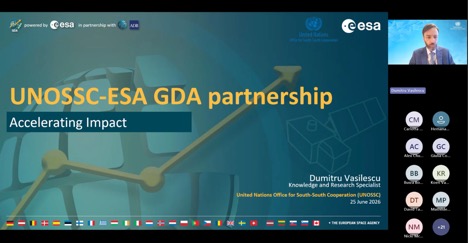
In June 2026, ESA’s Global Development Assistance programme hosted a public webinar on triangular cooperation and the role of satellite Earth Observation in sustainable development. The ESA-UNOSSC partnership was featured as a practical example of how countries can work together to apply satellite technology to real development challenges.
The webinar presented the results of the Expression of Interest process, highlighted the common priorities identified by Member States and introduced the satellite data services and tools available through ESA.
What comes next?
The partnership is now entering its next phase. This phase will include further engagement with participating countries to refine their requirements, identify where needs genuinely overlap and determine where country-to-country exchange, joint learning or more tailored national support can provide the greatest value.
A key opportunity will be the Global Alliance for South-South and Triangular Cooperation, coordinated by UNOSSC. Officially launching on the United Nations Day for South-South Cooperation in September 2026, the Alliance will bring together governments, United Nations entities, academia, the private sector and other partners on a single platform.
Through the Global Alliance and South-South Galaxy, countries will be able to quickly identify development needs, connect with partners and access practical solutions. ESA is expected to become one of the Alliance’s partners, making its Earth Observation expertise more accessible to hundreds of organizations around the world.
UNOSSC and ESA also plan to:
- Expand training and learning opportunities on Earth Observation.
- Share case studies, datasets and good practices through South-South Galaxy.
- Develop new pilot projects based on requests from developing countries.
- Strengthen partnerships with United Nations agencies, development banks and other institutions to support implementation and financing.
The partners are also exploring a Joint Innovation Challenge to encourage organizations to co-design practical Earth Observation solutions for sustainable development.
Looking further ahead, the goal is to help countries secure long-term financing so that satellite-based tools become a regular part of national planning and decision-making, rather than one-time pilot projects.
The success of the next phase will depend on whether today’s expressions of interest become country-led projects that deliver measurable results and can be adapted by other countries. If successful, the ESA-UNOSSC partnership will demonstrate how satellite data can become a practical tool for South-South and triangular cooperation, helping countries make better decisions and accelerate sustainable development.
Stay tuned for joint UNOSSC–ESA events at COP31.