







ESA signature
Earth observation maps air, water and soil pressures in Tuzla Canton
FAST EO Co-FINANCING FACILITY
04 November 2026

Earth observation maps air, water and soil pressures in Tuzla Canton

Tuzla Canton, in north-east Bosnia and Herzegovina, is one of the areas of the country most affected by pollution, largely because of its industrial heritage. Industry, mining, transport and urban … Read more
A new evidence-based system to strengthen drought resilience in the Horn of Africa
FAST EO Co-FINANCING FACILITY
26 May 2026

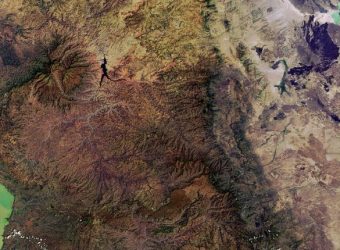
A new evidence-based system to strengthen drought resilience in the Horn of Africa

Drought is considered one of the world’s most economically damaging natural hazard. It is also one of the hardest to see coming and the least understood. In fact, unlike floods … Read more

From Space to Seascapes: Using EO to Strengthen Blue Carbon Assessments in the Red Sea and Gulf of Aden
FAST EO Co-FINANCING FACILITY
18 May 2026

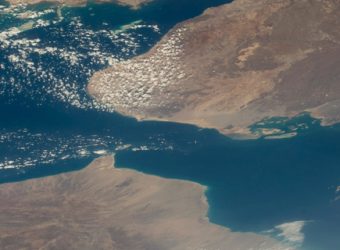
From Space to Seascapes: Using EO to Strengthen Blue Carbon Assessments in the Red Sea and Gulf of Aden

The World Bank is increasingly turning to Earth Observation (EO) to strengthen how it plans, assesses, and invests in coastal and marine environments. In the Red Sea and Gulf of … Read more

Coastal carbon and fishery assessment in Madagascar and Comoros
FAST EO Co-FINANCING FACILITY
20 March 2026

Coastal carbon and fishery assessment in Madagascar and Comoros

Satellites supporting coastal resilience in Madagascar and Comoros Across the western Indian Ocean, coastal ecosystems play a vital role in protecting communities, sustaining livelihoods, and responding to climate change. Mangrove … Read more

From space to preparedness: How Earth Observation can strengthen emergency response and resilience in the Dominican Republic
FAST EO Co-FINANCING FACILITY
21 January 2026

From space to preparedness: How Earth Observation can strengthen emergency response and resilience in the Dominican Republic

How does Earth Observation move from a map to a decision in development finance? In the Dominican Republic, the World Bank used ESA’s GDA Fast EO Co-Financing Facility to integrate … Read more

Enhancing Earth Observation for land cover and land use classification in Vietnam
FAST EO Co-FINANCING FACILITY
05 January 2026

Enhancing Earth Observation for land cover and land use classification in Vietnam

For International Financial Institutions, the challenge is no longer whether Earth Observation can add value, but how satellite data can be integrated into operational analysis in a way that is … Read more

Using satellite images to support erosion control in Madagascar
FAST EO Co-FINANCING FACILITY
15 December 2025

Using satellite images to support erosion control in Madagascar

Earth observation is emerging as a key resource for development finance. In Madagascar, it gives the German Development Bank KfW (Kreditanstalt für Wiederaufbau) a clearer view of where anti-erosion measures … Read more

Tracing macroplastics in West Africa’s coastal waters
Marine
08 October 2025

Tracing macroplastics in West Africa’s coastal waters

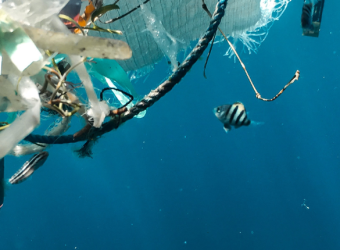
Plastic pollution has become one of the most pressing global environmental challenges, threatening marine ecosystems, biodiversity, and human livelihoods. In West Africa, where millions depend on the ocean for food … Read more

From space to strategy: using EO to improve urban development, starting in Sarajevo
FAST EO Co-FINANCING FACILITY
14 July 2025

From space to strategy: using EO to improve urban development, starting in Sarajevo

The European Bank for Reconstruction and Development (EBRD) recently conducted a deep dive impact assessment of its activities in Canton Sarajevo, Bosnia and Herzegovina, leveraging Earth Observation (EO) technologies to … Read more

Harnessing Earth Observation for Sustainable Water Management in Afghanistan
FAST EO Co-FINANCING FACILITY
03 April 2025

Harnessing Earth Observation for Sustainable Water Management in Afghanistan

Afghanistan’s water resources face increasing pressures from growing demand, climate change, and limited in situ data availability. Through the European Space Agency’s Global Development Assistance (ESA GDA) Fast Co-Financing Facility, … Read more

Conclusion of ESA’s GDA Marine Environment & Blue Economy Thematic Activity
Marine
07 February 2025

Conclusion of ESA’s GDA Marine Environment & Blue Economy Thematic Activity

The European Space Agency’s (ESA) Global Development Assistance programme’s (GDA) thematic activity on  Marine Environment & Blue Economy has reached its conclusion, marking the successful end of a transformative initiative … Read more

Unleashing the Blue Economy of the Caribbean area
Marine
14 June 2024

Unleashing the Blue Economy of the Caribbean area

The Blue Economy, which encompasses industries reliant on coastal and marine resources, plays a crucial role in the global economy,  contributing over US$2.5 trillion annually. In addition to this substantial … Read more

Web-based Application for Historical Data of Coastal Vulnerability Indices in Maldives Region
Marine
07 June 2024

Web-based Application for Historical Data of Coastal Vulnerability Indices in Maldives Region

In the Indian Ocean, there is a low-lying atoll island nation comprising approximately 1.200 islands, with 187 of them being currently inhabited. Given the limited land resources and high population … Read more

Seawater Pollution Assessment and Monitoring in the West Africa Coastal Areas (WACA) Region
Marine
26 February 2024

Seawater Pollution Assessment and Monitoring in the West Africa Coastal Areas (WACA) Region

Monitoring and continuously assessing seawater pollution play a pivotal role in safeguarding the well-being of marine environments, ensuring the preservation of seafood quality, and promoting the long-term sustainability of the … Read more

EO-based ecosystem assessment to support Blue Carbon evaluation in Tunisia
Marine
31 January 2024

EO-based ecosystem assessment to support Blue Carbon evaluation in Tunisia

Ecosystems are intricate environments that face increasing pressures, primarily driven by human interference and climate change, with their impact being the most notable factor contributing to performance degradation. The success … Read more